
Notch changelog
Notch.so Update: Introducing Variables (Beta) 🎉
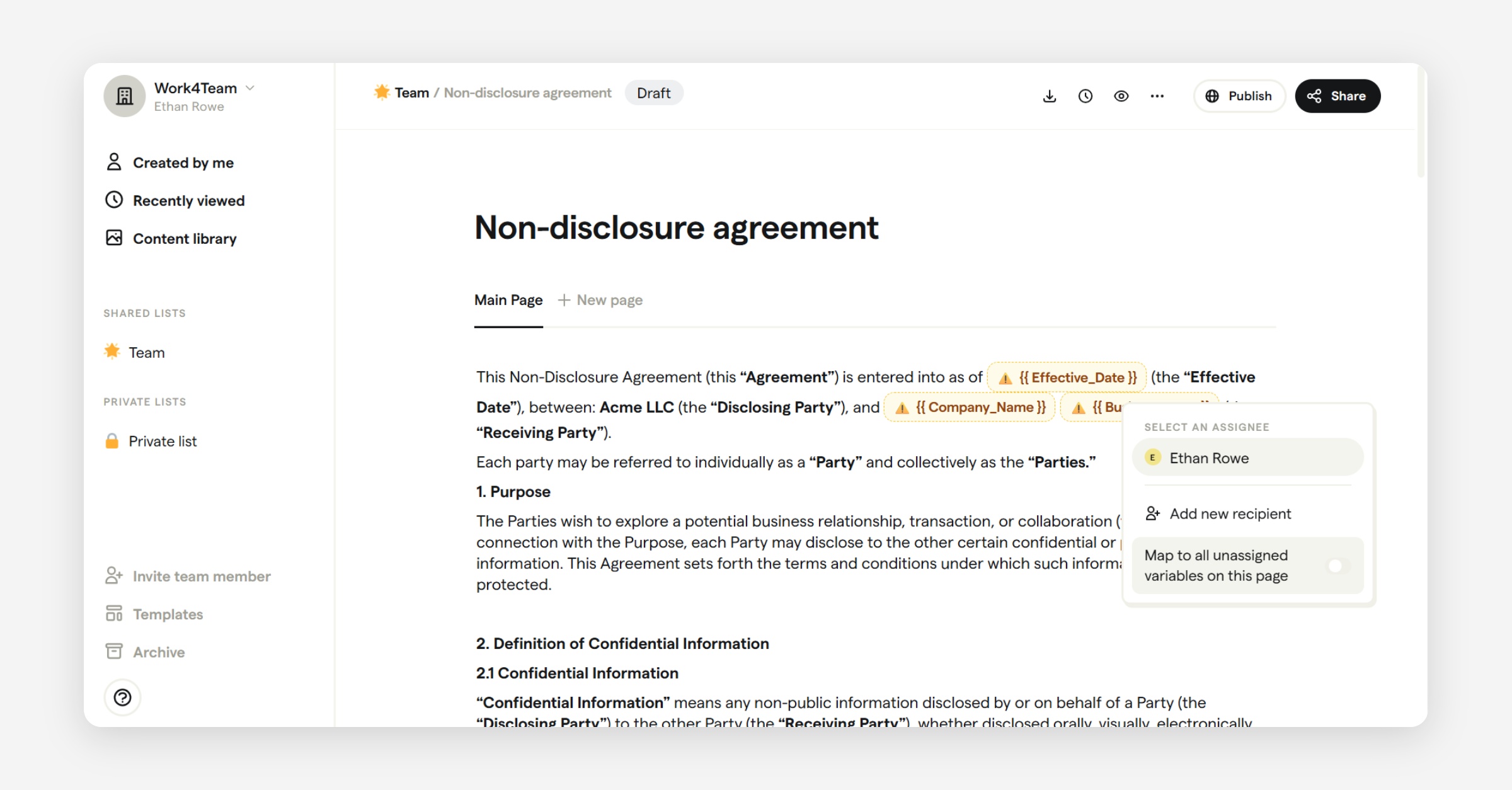
Since our last update in November 2025 — where we shared that we were stabilizing the platform and planning future features — we’ve been heads-down building the foundation for what’s next.
Today, we’re excited to share the first major feature — Variables — now available in Beta.
We highly recommend watching this quick video overview of the Variables feature: YouTube - Close Deals Faster with Dynamic Contract Templates in Notch
🔍 What You Told Us
We heard consistent feedback from you:
• Templates are useful, but too static
• Editing contracts manually every time is repetitive
• Dynamic content, structured data and cleaner automation are essential
This release is a direct response to your most-requested improvement: the ability to build flexible templates with placeholders that become structured form fields in documents.
✨ What Are Variables?
Variables allow you to build smarter Notch templates by adding data placeholders that become interactive fields when you generate a document. Instead of editing text over and over — like client names, expiration dates, or deal values — you define variables once inside a template and reuse them every time you generate new documents.
Variables bring flexibility, consistency, and structure to your contracts, proposals, and client documents.
🛠 How Variables Work
Inside any template or document:
Place your cursor where dynamic content should go.
Type “/” to open the command menu.
Select Variables.
Name your variable (use underscores — no spaces). Example: client_name
Press Enter — a configuration pane opens.
Add a user-friendly display name (e.g., Client Name) and choose the type.
📊 Supported Variable Types
You can define structured variables using the following types:
Text Number Date Email Phone Number Dropdown Each type enforces data consistency and reduces manual errors. More variable types, such as dynamic tables, calculated fields etc. will be added in future.
🔽 Powerful Dropdown Variables
One of the most valuable variable types is Dropdown. Instead of letting users enter free-text values (which leads to inconsistency and mistakes), Dropdown variables let you define a set of allowed choices.
For example:
Business Type
• LLC
• Corporation
• Partnership Or a simple status field like:
Auto Renewal
• Yes
• No
Dropdown variables give you control over structured data — reducing ambiguity and improving downstream workflows.
📄 From Template to Generated Document
After you build a template with variables:
• Click Generate Document
• The variables automatically become fields in the document
• You can assign each field to specific users
For example:
• A Sales rep fills in deal values
• A Customer fills in their contact details
• Finance selects the appropriate payment term
This ensures clean data input and faster completion — no back-and-forth or repeated edits.
🧪 Variables Is in Beta
We want to be transparent — Variables is currently in Beta. It’s usable and available now, but it’s also a work in progress. We’ll be expanding functionality, improving the experience, and iterating based on your feedback.
👉 Here’s how you can help shape what comes next:
• Send feedback: [email protected]
• Submit feature ideas: https://roadmap.notch.so
Your voice matters — what you find useful or confusing helps us prioritize improvements.
🛣 What’s Next
This release is a milestone in our renewed development journey. We’re committed to regular updates, transparent communication, and building the features you’ve been asking for.
Thank you for your patience, trust, and continued support. Notch is evolving — and this is just the beginning. 🚀